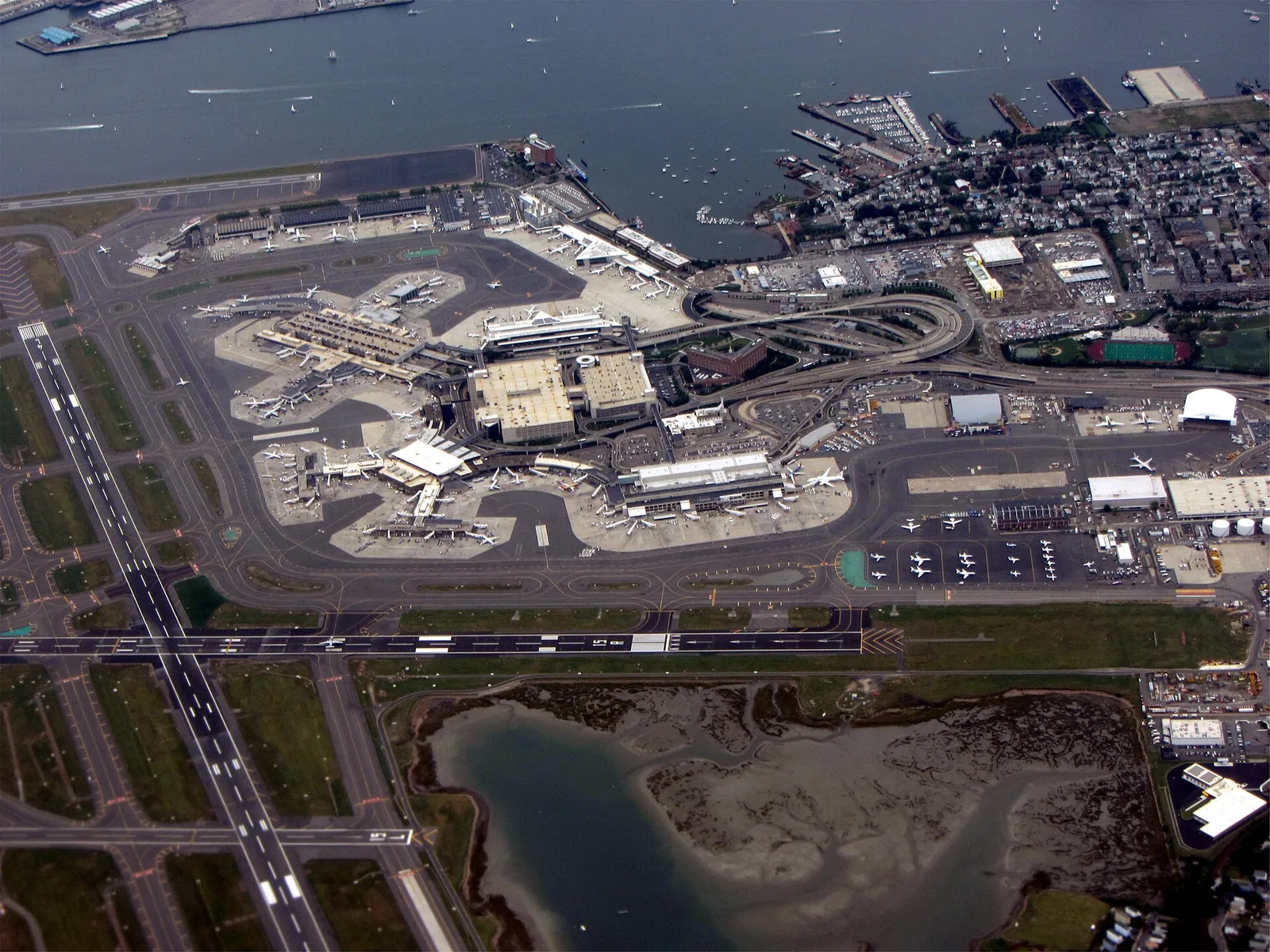
A routine Saturday morning arrival at Boston Logan International Airport turned into a serious safety scare when two commercial jets ended up about 300 feet apart, forcing a Delta Air Lines crew to abandon its landing at the last moment.
The Federal Aviation Administration said the crew of Delta Flight 2351 performed a go-around at around 11:30 a.m. because another aircraft was departing from an intersecting runway. The Delta jetliner, arriving from Dallas Fort Worth International Airport, was carrying 129 passengers and six crew members. No one was hurt.
The other aircraft was an American Airlines jet that was taking off, according to the FAA. The two planes came within roughly 300 feet of one another before the Delta pilots aborted their approach, climbed back out and circled around for a second, successful landing attempt.
A Routine Maneuver — for an Alarming Reason
Let's be clear about one thing: a go-around itself is not a crash or even a failure. The FAA describes it as "a safe, routine procedure performed at the discretion of a pilot or an air traffic controller to maintain safe operations." Pilots train for it constantly. What has aviation-safety experts concerned is not that the maneuver was performed, but why it was needed in the first place — and how close the two jets came.
Todd Curtis, an aviation safety expert and former Boeing engineer who reviewed flight data on the encounter, did not mince words. "This is a significant incident," he told the Associated Press, adding that it was especially troubling because it involved two professional airline crews rather than a small private plane or a student pilot.
Delta, for its part, stressed that its people did everything by the book. "Nothing is more important than safety," the airline said, noting that the crew "followed established procedures in coordination with Air Traffic Control." The flight "landed safely, and customers deplaned normally." The Massachusetts Port Authority, which runs Logan, and American Airlines both deferred questions to the FAA, which confirmed it is investigating.
A Charged Moment for Aviation
The Boston close call lands at a politically charged moment for American aviation. The country has seen a troubling run of near-misses and runway incursions in recent years, and the system that keeps planes safely separated has been under visible strain — with persistent air-traffic-controller staffing shortages and aging equipment among the recurring complaints from front-line workers and lawmakers alike.
The timing is hard to ignore. The Senate Commerce Subcommittee on Aviation is scheduled to hold a hearing on Capitol Hill on Tuesday to examine near-misses and runway incursions and ways to strengthen safety across the national airspace system. The Boston event is all but certain to come up.
For the 135 people aboard Delta 2351, the bottom line is that the safety system worked: the pilots saw the conflict, broke off the approach and brought everyone down safely. The harder question, now in the hands of FAA investigators, is how two airliners ended up that close to begin with.