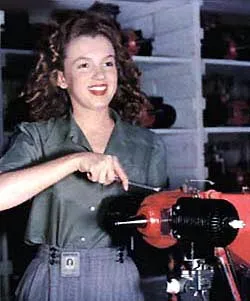
More than six decades after Marilyn Monroe was found dead in her Brentwood bedroom, one of America's most celebrated cold-case detectives says the scene never sat right with him.
Paul Holes — the retired California investigator whose forensic work helped identify the Golden State Killer, Joseph James DeAngelo — has turned his attention to Hollywood's most enduring mystery. In a new FOX special, "Celebrity Crime Scene: Marilyn Monroe," which premiered June 21, Holes lays out what he calls a series of "red flags" in how the 1962 case was handled.
What the Record Actually Says
The verified facts are not in dispute. Monroe, 36, was found dead the night of August 4–5, 1962, at her home on Fifth Helena Drive in Los Angeles. Chief Los Angeles County Coroner Theodore Curphey ruled the death a "probable suicide" by acute barbiturate poisoning, citing pentobarbital and chloral hydrate in her system, according to historical records. Empty medicine bottles were found beside her bed.
That ruling has never been overturned. In 1982, the Los Angeles County District Attorney's Office reviewed the matter; after more than three months, investigators found no credible evidence of murder — though their report did concede that "factual discrepancies" and "unanswered questions" remained.
Nothing in Holes' analysis changes the official finding. What he offers is the perspective of a veteran crime-scene examiner, not a new legal conclusion.
The 'Red Flags'
Holes' central complaint is about process. "The first red flag, of course, was the lack of documentation," he says, pointing to the scarcity of crime-scene photographs and what he sees as a failure to follow standard procedure in 1962.
His other observations focus on a scene he describes as oddly tidy. The bedding was clean and smooth. The pill bottles were lined up neatly. "People who are going to ingest that number of pills don't typically take that kind of care," Holes says, contrasting the orderly room with the chaos he says usually accompanies an overdose death.
A Caution, Not a Verdict
What makes Holes' commentary notable is what he doesn't claim. He is careful to frame his findings as professional observations, not proof of foul play. Crucially, he resists the leap that armchair theorists have made for 60 years. "Nobody stages a suicide to look like a better suicide," Holes says — a line that cuts against the more sensational conspiracy theories as much as it questions the original ruling.
The takeaway from his analysis is narrower, and more sober, than the headlines suggest: the 1962 investigation was, in his judgment, sloppy enough that some questions can no longer be cleanly answered. Poor documentation leaves room for doubt, but doubt is not evidence of murder.
For a case that has drawn rumors involving the Kennedys, the mob and Hollywood power brokers, Holes' contribution is unusually restrained. He is not declaring that Marilyn Monroe was killed. He is saying that, by modern forensic standards, her death was never properly worked — and that, decades later, the truth may simply be out of reach. The official ruling remains probable suicide.